
M
Mainella, Fran

With a background in the parks and recreation industry, Fran Mainella was appointed as the first woman Director of the National Park Service in 2001. Fran Mainella serves as co-chair of the US Play Coalition and is a Visiting Scholar at Clemson University's Department of Parks, Recreation & Tourism Management.
Maintaining Child’s Play
Maintaining Child's Play offers a comprehensive approach to playground maintenance with the goal of preventing or minimizing injuries on the playground, legally protecting playground installers and operators, and facilitating the longevity of playground equipment.
Maintenance Kits
Many manufacturers of playground equipment supply the playground owner with a maintenance kit to help preserve the aesthetics, usefulness, and safety of the equipment. These maintenance kits range from a maintenance record-keeping document to extra tools and hardware (nuts and bolts).
Malaguzzi, Loris

Loris Malaguzzi was an early childhood educator who founded the educational philosophy known as the Reggio Emilia Approach, which views children as strong, powerful, and competent to learn through their own exploration. Children are encouraged to develop their own theories about how their environment works through discovery.
Mallery, Otto T

Otto Tod Mallery, known as the "Father of Recreation in Philadelphia," was an economist, "citizen volunteer," and leader in the local, national, and international recreation movement of the early 20th century. Calling him "farseeing, statesmanlike, and devoted," Howard S. Braucher further characterized him as "one of the great leaders in the recreation movement nationally and locally in Philadelphia."
Man, Play and Games

Man, Play and Games is a classic study of play and games and how they affect society and become a part of daily life. The book was written by Roger Caillois and was originally published in 1958 as Les jeux et les hommes.
Manhattan Toy

Manhattan Toy designs, manufactures, and markets toys that "blend science and whimsy" for visual and tactile stimulation and imaginative play. They believe that "play is not only fun, it's essential to a child's cognitive, emotional, and social development."
Marbles

Marbles are small perfectly round objects that have been played with by children down through the ages. There is evidence of marble games being played by the ancient Egyptians, Aztecs, Romans, and Greeks. Although some early games may have been played with stones and nuts, there have also been small clay balls found in many prehistoric ruins.
Marcus, Clare Cooper

Clare Cooper Marcus is an internationally recognized author and researcher on the psychological and sociological components of architecture, landscape design, and urban open space. From her studies she has promoted the design of environments for children, in particular by adding gardens and natural elements to outdoor spaces around schools, hospitals, day care centers, and public housing developments.
Mather, Stephen

Stephen Tyng Mather was the founding Director of the National Park Service and an early supporter of state parks. It was said that he "sacrificed his money, his health, his time, his opportunities for wealth, in order that he might promote that which will mean so much to the people of this country in the future."
Mattel

Ruth and Elliot Handler joined with Harold "Matt" Matson to form Mattel Creations in 1945. The Mattel name was a combination of Harold's nickname Matt and part of Elliot's name.
Michaelis, Bill

Bill Michaelis is a leading play advocate who has written, taught, and consulted extensively in the area of play and its applications to creativity, learning development, self-esteem, and healthy living for all age groups.
Middleball

Middleball is a new sport created by Scott Loetman in 2009. A relatively simple ball game to play, Middleball utilizes indoor courts, nets, and a beach ball to offer a fun activity for people of all ages and abilities.
Milton Bradley

Milton Bradley, lithographer and inventor, formed the Milton Bradley Company in 1860 in Springfield, Massachusetts. After playing an old English board game, Milton designed an American version called The Checkered Game of Life, produced several hundred copies, and sold all of them in a few days in New York City. This sparked a fad and Milton sold 40,000 copies that first year and thereafter focused his business on games.
Miracle League

In 1997, Coach Eddie Bagwell of the Rockdale Youth Baseball Association (RYBA) Conyers, Georgia invited a 7 year old child confined to a wheelchair to participate in the game. Michael had attended every game and practice while cheering on his 5 year old brother. The next year, the RYBA gave other children with disabilities the opportunity to play baseball within their complex of typical baseball diamonds.
Miracle Recreation Equipment Company

Over 80 years ago, in 1927, John Ahrens formed Ahrens Manufacturing Company in Grinnell, Iowa. He had seen a perpetual motion machine at the Texas State Fair and with that inspiration designed a new merry-go-round called the Miracle Whirl. John was awarded a patent for his unique design which allowed just one person to make the merry-go-round move by shifting their weight across the surface.
Missoula Children's Theatre
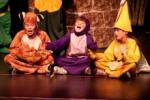
The Missoula Children's Theatre (MCT) is committed to the development of life skills in children through their involvement in the performing arts. Communication, self-discipline, and team work skills are fostered through MCT's local children's theatre, international traveling theatre, performing arts camps, and their Next Step Prep summer high school performance arts program.
Mobility

Mobility is the state of being in motion. In children, mobility progresses from crawling as babies to a host of movements, such as walking, running, jumping, and climbing. It takes coordination to develop patterns of movement by integrating visual information with the movement of the limbs.
Mold
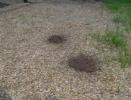
Mold can frequently be found on playgrounds with wood surfaces and in wood mulch. The mold that most commonly grows on wood playground surfaces is called a slime mold. This mold is irregular in shape and grows in various colors such as brown, yellow, pink, or white. Slime molds are a temporary nuisance and are generally confined to small areas.
Montessori, Maria

Dr. Maria Montessori was one of the most influential pioneers in education for children in the 20th century, and her methods have continued to be utilized in Montessori schools around the world. Her discoveries in working with children led to teaching methods that allow for child-directed learning with the teacher facilitating the environment to aid in the child's interests with the message to "follow the child."
Moore, Robin C

Robin C. Moore began his lifelong career by combining his interests in environmental design, child development, and play spaces while at MIT. He is a well known author, teacher, speaker and play advocate. Robin shares his expertise in child development, landscape architecture, and environmental education around the world.
Morgan’s Wonderland

Morgan's Wonderland is an all-inclusive, ultra accessible theme park for guests of all ages and of all physical and cognitive abilities. Located near San Antonio, Texas, it is a place of "smiles and laughter" where "the common element of play creates an atmosphere of inclusion for those with and without disabilities, encouraging and allowing everyone to gain a greater understanding of one another."
Motor Skills

Motor skills refer to the development of motor control, precision, and accuracy in the performance of both fundamental and more complex movements.
Move Theory

The Move Theory is a consulting and training company based on Dr. Kwame M. Brown's idea that exploring movement in a playful manner is the way to create "strong, healthy, happy young people." He maintains that such exploration must also include "effort, consistency, interaction and cooperation with others and the development of internal belief...through infrastructure and gentle guidance."
Mr. Potato Head
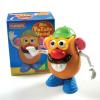
Mr. Potato Head is an iconic toy sold under the Playskool division for Hasbro. The simple concept of making funny faces by attaching plastic body parts to vegetables and fruits expanded over the years to become a worldwide franchise that includes the toy line as well as movie, television, and video game endeavors.
Must Have Play

As an elders' play space design company, Must Have Play believes in providing safe, healthy playgrounds that the "Baby Boom" generation will want to visit for exercise, socializing, and play. They believe that elder play spaces can be "light-hearted and playful" as well as being "appealing, attractive, accessible, and safe places."
