
U
U.S. Access Board

The U.S. Access Board, which was originally named the Architectural and Transportation Barriers Compliance Board, is an independent federal agency that promotes equality for people with disabilities. It works to accomplish its mission through leadership in accessible design and the development of accessibility guidelines and standards.
U.S. Consumer Product Safety Commission
The U.S. Consumer Product Safety Commission (CPSC) is an agency that was created in 1972 and began operations in 1973. The main purpose of this agency is to protect the public from unnecessary harm or death from consumer products. They have thousands of consumer products that are under their jurisdiction.
U.S. Consumer Product Safety Improvement Act
On August 14, 2008, Congress passed the U.S. Consumer Product Safety Improvement Act of 2008. This law was necessary to "establish consumer product safety standards and other safety requirements for children's products and to reauthorize and modernize the U.S. Consumer Product Safety Commission."
U.S. Public Interest Research Group

The U.S. Public Interest Research Group (US PIRG) is a network of researchers, advocates, organizers, and students who act as a non-partisan consumer and environmental advocacy group.
U.S. Toy Company
U.S. Toy Company is a family-owned company specializing in novelty toys, balloons, stuffed animals, educational toys, teacher supplies and teaching aids, magic tricks, and costumes.
Ultimate Block Party
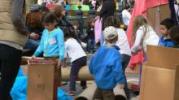
New York City hosted the first Ultimate Block Party event on October 3, 2010. Described as a giant play date, 50,000 children and parents enjoyed a day at Central Park filled with fun activities designed to encourage learning through play.
Unit Blocks
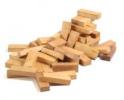
Caroline Pratt, an American innovative educator who was part of the progressive movement in the early 1900s, is credited for developing wooden blocks, called unit blocks. They were similar to the blocks used by Friedrich Froebel in his kindergartens.
Universal Access to Outdoor Recreation
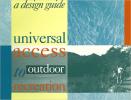
Project Play and Learning in Adaptable Environments, Inc. (PLAE), a nonprofit, multi-disciplinary organization, published Universal Access to Outdoor Recreation: A Design Guide in 1993. It presents an approach for incorporating universal design into the outdoor recreation environment.
Universal Design

The purpose for utilizing the Principles of Universal Design for children’s playgrounds is to provide inclusive play where every child, regardless of ability or disability, is welcomed and benefits physically, developmentally, emotionally and socially from the environment.
UPC Parks
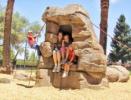
As a division of Universal Precast of Redding, California, UPC Parks specializes in linked climbing boulders, rope bridges, and rock and log stepping stones for children’s playgrounds.
Upper Body Strength
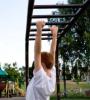
Upper body strength is the ability of the body to exert a maximum force against an object external to the body in one maximum effort of the upper body muscles. Upper body strength is important for the everyday demands that are placed on the arms, shoulders, and back.
Urban Play
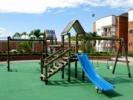
An urban area is an area with a high population density. Americans living in urban areas currently number 79 percent of the population. It is projected that by the year 2050 that percentage will rise to 90 percent. This demographic shift often makes urban parks the sole connection to the natural world for an increasing number of children.
US Play Coalition
The US Play Coalition is a partnership to promote the value of play throughout one's life. It consists of individuals and organizations that recognize play as a valuable and necessary part of a healthy and productive life.
US Play Coalition 2011 Conference on the Value of Play
The 2011 Conference on the Value of Play was held February 6-9, 2011, at Clemson University's Madren Conference Center. The US Play Coalition is a partnership to promote the value of play throughout one's life. It consists of individuals and organizations that recognize play as a valuable and necessary part of a healthy and productive life.
US Play Coalition 2012 Conference on the Value of Play
The US Play Coalition 2012 Conference on the Value of Play: Multi-Generational Actions and Strategies was held February 26-29, 2012, at Clemson University's Madren Conference Center. The US Play Coalition is a partnership to promote the value of play throughout life.
US Play Coalition 2013 Conference on the Value of Play
The theme of the US Play Coalition 2013 Conference on the Value of Play was "Taking Action!" Held February 17-20, 2013, at the Madren Conference Center at Clemson University, over 300 attendees from around the world.
