
R
Rachel's Challenge

Rachel's Challenge is a nonprofit organization that offers a series of school, business, and community programs and workshops modeled after the life of Rachel Scott, the first person killed in the 1999 Columbine High School shootings. Their mission is to "inspire, equip, and empower every person to create a permanent positive culture change in their school, business and community by starting a chain reaction of kindness and compassion."
Radio Flyer Inc

Radio Flyer Inc. is one of the oldest national toy companies that is owned and operated by the original founding family. As makers of the little red wagon and subsequent models of wooden, steel, and plastic toy wagons and tricycles, Radio Flyer has been making coasting toys "for every girl and boy" since 1917.
Rainbow Crafts Company
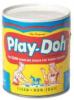
Rainbow Crafts Company created, manufactured, and marketed Play-Doh, an elastic, reusable modeling clay. Though they existed only eight years and manufactured only Play-Doh, their product is now played with by children in 75 countries worldwide.
Randall Museum

The Josephine D. Randall Junior Museum, known as the Randall Museum, is an interactive art and science museum that is run by the San Francisco Recreation and Park Department. Located on 16 acres that overlook San Francisco, they strive to inspire creativity, curiosity, and appreciation of the world cultures and environment.
Randall, Josephine
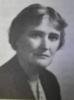
Early in the twentieth century, Josephine D. Randall was one of the first women to direct a municipal playground department and a major recreation department. Over twenty five years she led the San Francisco Recreation Department from inception to being a national noteworthy example of quality.
Recess
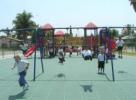
Recess for children is typically enjoyed outdoors and has been defined as a break period from the relatively inactive routine of the classroom. Traditionally, recess has been loosely structured and has allowed children to freely choose their activities and playmates on the school playground. Recesses usually last 10 to 20 minutes.
Recreation
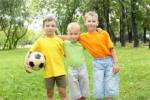
Recreation is defined in the dictionary as a refreshment by means of some pastime, diversion, exercise, or other activity that results in relaxation and enjoyment. Research has shown that recreation improves the quality of life for individuals, raising their overall satisfaction with life.
Recreation Creations
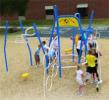
With a commitment to environmental stewardship, Recreation Creations offers creative play structures for early childhood play spaces and school-age children. Their free standing elements range from slides to spider web climbers, from swings to dome climbers, and from whirls to Rocky Mountain Climbers. They also offer site amenities, such as benches, tables, and bike racks.
Recreation Management
Recreation Management is a monthly magazine published by CAB Communications of Palatine, Illinois. The magazine was created in the fall of 1999 by publisher Chris Belbin with the aim of providing facility managers of recreation, sports, and fitness facilities current information on products, ideas, issues, and trends in the recreation market.
Red Rover
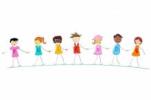
Red Rover is a classic outdoor neighborhood and playground game that children have played for years. The game is made up of two teams of children standing at least 20 to 30 feet apart, who form two lines facing each other by holding hands. The object of the game is to capture players from the other team.
Red Swing Project
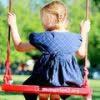
The Red Swing Project is the result of a University of Texas School of Architecture assignment as an urban intervention within the city of Austin, Texas. In February of 2007, one student began to anonymously hang red swings in public places to infuse a sense of playfulness into the urban environment. The assignment took on the feel of a science experiment as reactions to the red swings were observed.
Reese, Lloyd

As Director of Engineering and Development at PlayPower, Inc. and former president of International Play Equipment Manufacturers Association (IPEMA), Lloyd Reese believes that "The first decade of this century has also seen a society that is slowly but steadily realizing that benefits of play are far reaching."
Reflections of a Recreation Professional
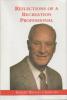
Reflections of a Recreation Professional is an autobiography written by Robert Wilson Crawford and published by the National Recreation and Park Association in 1993. He had a long and distinguished career in park and recreation and was recognized as one of the greatest leaders in the field.
Reflexive Movement Phase
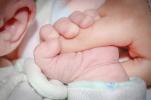
Children move through a developmental progression in the acquisition of motor skills. The reflexive movement phase ranges from birth to about 1 year. Reflexes are involuntary movements, and through this reflex activity the infant gains information about his immediate surroundings.
Reggio Emilia Approach

The Reggio Emilia Approach is an approach to teaching children based on observing what children know, what they are curious about, and what challenges them. The emergent curriculum develops as the teachers actively seek out and follow the interests of the children.
Restore Hockey

Restore Hockey is a nonprofit organization dedicated to making the sport of hockey financially accessible to children through the recycling of hockey equipment, financial donations for new equipment packages, partnerships with businesses and leagues, and the proceeds from their Pro Shop.
Rethinking Childhood

Tim Gill, a leading philosopher on childhood in the United Kingdom, launched the blog Rethinking Childhood in order to reach more people and engage more people in a conversation concerning "the changing nature of childhood."
Right to Play

Right to Play began as an idea of the Lillehammer Olympic Organizing Committee in 1992. They organized the Olympic Aid committee in preparation of the 1994 Olympic Winter Games in Lillehammer, Norway. Specific Olympic athletes were chosen to be Ambassadors of Olympic Aid to raise money for projects in war zones or areas of distress.
Rimmer, James

Dr. James H. Rimmer is a researcher who has had a long career in developing and directing health promotion programs for people with disabilities. As an author and professor, he has written on various subjects relating to health promotion, physical activity, secondary conditions, and disability, and he has been characterized as "the nation's leading voice on physical activity and disability."
Risk and Our Pedagogical Relation to Children On the Playground and Beyond
Risk and Our Pedagogical Relation to Children: On the Playground and Beyond was written by Stephen J. Smith as a study about children’s experiences on the playground regarding the riskiness of children’s lives, their sense of risk, and the involvement of adults that he calls the pedagogical relation to children.
Risk Taking
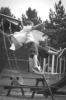
Children encounter risks on a daily basis and are engaged in an intense learning process about life's risks and uncertainties. Risk involves the chance of an adverse outcome, which could result in injury. Minor scrapes and bruises are a natural result of the very nature of play. They help children "learn from experience" and gain an understanding of the consequences of their actions as well as the extent of their abilities.
RJ Thomas Manufacturing Company Inc

The RJ Thomas Manufacturing Company, Inc. designs and manufactures the Pilot Rock brand of products. They offer outdoor park, landscape, streetscape, recreational facility, and campground furnishings, custom signs and graphics, and wheelchair accessible products for parks and playgrounds.
Robert W Crawford Recreation and Park Hall of Fame
The Robert W. Crawford Recreation and Park Hall of Fame recognizes individuals who had made outstanding and lasting contributions to the advancement of recreation and parks.
Rock Climbing

Rock climbing is a fun and challenging activity for children that can be enjoyed on natural rock features and on artificial climbing walls. Today's playgrounds offer many types of climbing structures including artificially built rock walls with polyurethane climbing holds for children to grab and realistic-looking boulders with natural crevices to scale.
Rock-Op Climbing Boulders
Rock-Op Climbing Boulders designs, cuts, delivers, and installs climbing boulders for playgrounds and water play spaces. These sandstone boulders are customized for different levels of climbing abilities, space requirements, and desired added playground features.
Rock-Paper-Scissors
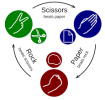
Rock-Paper-Scissors is a game played to settle disputes between two people. Thought to be a game of chance that depends on random luck similar to flipping coins or drawing straws, the game is often taught to children to help them settle arguments between themselves on their own without adult intervention.
RockCraft Designs
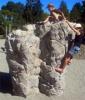
Designing climbing boulders as well as climbing wall systems, RockCraft Designs has created climbing features that are safe and fun for all ages. The playground boulders are uniquely handcrafted out of reinforced concrete (GFRC) with a variety of handhold. Their climbing wall structures include poolside climbing walls.
Rockwerx
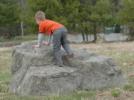
Rockwerx is a company based in central Massachusetts that designs, manufactures, and installs climbing walls. They offer consulting expertise as well as routesetting programs and routesetting training for climbing gym staff. They also offer mats, flooring and padding, climbing holds, and an auto belay system.
Rogers, James E
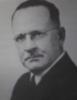
James Edward Rogers was a sports and recreation teacher, leader, and director in the early 1900s. Building on these experiences he later became a community organizer and public speaker on recreation and physical education issues.
Role Play

When a child engages in make-believe and pretend play, he takes on a role of someone else, imitating actions and speech from earlier observed situations and incorporating them into his play. Role play is based on first-hand experience and allows children to practice what happens in real life. They act in an "as if" state in their role play, "as if" it were real.
Roller Skating
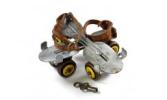
Roller skating is a recreational activity in which the participants wear shoes fitted with small wheels to move on outside paved surfaces and on inside roller rink floors.
Rough and Tumble Play
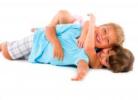
Rough and tumble play has been defined as physically vigorous behaviors, such as chase and play fighting, that are accompanied by positive feelings between the players. Rough and tumble play allows a child to understand the limits of their own strength and discover what other children will and won't allow them to do.
Rousseau, Jean-Jacques

Jean-Jacques Rousseau was an 18th century political philosopher, education reformist, author, tutor, and composer. His ideas had an impact on political thought and practice, the emerging European romanticism movement, the development of the popular novel, and the discovery approach to education.
Rudimentary Movement Phase
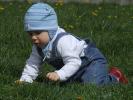
The rudimentary movement phase ranges from birth to about age 2. It includes the basic motor skills acquired in infancy: reaching, grasping, and releasing objects as well as sitting, standing, and walking.
