
T
Takoma Plays!
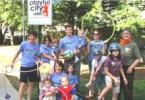
Pat Rumbaugh, a physical education teacher and tennis coach, wanted to promote play in her community of Takoma Park, Maryland. After contacting KaBOOM! for information, she invited a group of people to form a committee to promote indoor and outdoor play for all ages.
Teacher Tom
The Teacher Tom blog is authored by Tom Hobson, the sole teacher at the Woodland Park Cooperative Preschool in Seattle, Washington. Writing a personal blog that is separate from but inspired by his daily activities at the preschool, Tom writes about "teaching and learning from preschoolers."
Team Sports

Team sports are organized games governed by a set of rules that are recognized and interpreted by an official governing body as the standard for play. The top team sports for children ages 6 through 17 are basketball, baseball, soccer, football, and volleyball. About 20 million American children play organized out-of-school sports with about 25 million playing competitive school sports.
Temporal Awareness

Temporal awareness is the development of an internal time structure that recognizes the relationship between movement and time. People are enabled to efficiently coordinate movements of the eyes and limbs.
Tetherball

Tetherball is a game that has been popular on playgrounds, schoolyards, and summer camps for years. The game involves two players who attempt to hit a ball attached to a pole by a rope in opposite directions until one of them wraps the rope completely around the pole and the ball stops. The history of the game is uncertain with some suggesting that in the ninth century it started with the Tatars.
The 4 Kids

Based in Greenville, Texas, The 4 Kids offers custom play space designing, manufacturing, and installation of one-of-a-kind, interactive play environments and site amenities that extend classroom learning into the fields of paleontology, biology, geology, and the natural sciences.
The Ambiguity of Play

The Ambiguity of Play was written by Brian Sutton-Smith and published in 1997. As a leading play theorist, Sutton-Smith considers the possible meanings of play as they have been debated and described in a range of disciplines including education, biology, psychology, and sociology.
The Association for the Study of Play
The Association for the Study of Play (TASP) is a professional organization whose purpose is threefold: to promote the study of play, to support and cooperate with other similar organizations, and to organize meetings and publications in order to disseminate information related to play.
The Baby Einstein Company

The Baby Einstein Company, a division of the Walt Disney Company, offers multimedia products, toys, and baby products for children aged three months to 3 years old. Under the slogan of "Where Discovery Begins," they offer an introduction to the subjects of music, language, art, science, and mathematics from a baby's point-of-view.
The Chimes Company
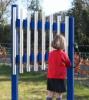
The Chimes Company offers indoor and outdoor recreational musical instruments and sensory equipment for inclusion in playgrounds, schools, nature and botanical parks, and rehabilitation and therapy facilities as well as zoos and family entertainment centers.
The Complete Guide to Playground Development
The Complete Guide to Playground Development was written by Robert Collins and published in 2008. The book serves as a manual to guide the playground development process of commercial and public use playgrounds from design to final construction.
The Demonstration Play School of 1913

Dr. Clark W. Hetherington, a pioneer in the playground movement in America, wrote The Demonstration Play School of 1913 to report the purpose of, execution of, and success of the Summer Play School he established on the University of California Berkley campus.
The Developmental Benefits of Playgrounds
With multiple audiences in mind, The Developmental Benefits of Playgrounds, co-authored by Joe L. Frost, Pei-San Brown, John A. Sutterby, and Candra D. Thornton, focuses on the importance of playgrounds for children's broad developmental needs.
The Dirty Dozen
The National Recreation and Park Association (NRPA) is committed to promoting safe play environments for children. When the National Playground Safety Institute (NSPI) was formed as part of NRPA, the NPSI Board of Directors along with their instructors prioritized a list of what they considered to be the top twelve safety issues that result in playground injuries.
The Genius of Play

The Genius of Play™ is a national movement spearheaded by The Toy Association, with the mission to give families the information and inspiration needed to make play an important part of every child’s life.
The Grass Stain Guru
The Grass Stain Guru was a blog about "restoring childhood, and saving ourselves in the process." The blog, written by Bethe Almeras, covered topics on unstructured play, children and nature, and education reform in an intimate, conversational tone that encouraged her readers to interact and share their experiences.
The Homeless Children's Playtime Project

Serving families in Washington, D.C., The Homeless Children's Playtime Project reduces the traumatic effects of homelessness on children who live in temporary housing programs as well as promotes their physical and psychological development.
The Hurried Child

The Hurried Child: growing up too fast too soon was written by David Elkind, Ph.D. The author calls attention to the crippling effects of hurrying children through life and blurring the boundaries of what is age-appropriate for them by expecting too much of them too soon forcing them to grow up too fast.
The Leader's Handbook
Co-authored by Bill Michaelis and John M. O'Connell, The Leader's Handbook, Learning Leadership Skills by Facilitating Fun, Games, Play, and Positive Interaction is a practical guide for play leaders geared toward training them to manage all age groups and effectively lead games play and team-building activities.
The Nature Principle
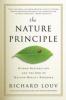
Published in 2011 by Algonquin Books,The Nature Principle, Richard Louv's follow up book to Last Child in the Woods: Saving Our Children from Nature-Deficit Disorder, expands the focus beyond children to our society's needs for nature. He says The Nature Principle is "about the power of living in nature - not with it, but in it."
The Nuts and Bolts of Playground Construction
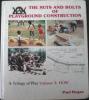
The Nuts and Bolts of Playground Construction, written by Paul Hogan, is Volume 3 of A Trilogy of Play and focuses mainly on the "how" of creating play spaces. Written largely as a "how to" book complete with diagrams, designs, and copious pictures, Paul also spotlighted nations where play is honored and includes articles that highlight his philosophy of play.
The Play Movement and Its Significance
Dr. Henry S. Curtis, a leader in the American play movement, wrote The Play Movement and Its Significance (1917) to provide "a concrete picture of the extent of the development of play in this country, the sources from which the movement has sprung, and the direction in which it is going."
The Play Movement in the United States

The Play Movement in the United States, A Study of Community Recreation, written by Clarence E. Rainwater, PhD. was published in 1922 by The University of Chicago. The book is an analysis of the concept and structure of the play movement in the United States from the nineteenth and early twentieth centuries.
The Playground
The Playground was the official monthly journal published by the Executive Committee of the Playground Association of America (PAA). The association was formed to support and expand the playground movement of the late 19th century and early 20th century.
The Playwork Primer
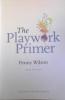
Professional playworker Penny Wilson has communicated the essence of the British playwork movement through The Playwork Primer, a 40 page booklet published by the Alliance for Childhood. She has endeavored to introduce playwork and the adventure playground concepts to the American play industry.
The Power of Play
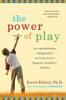
David Elkind wrote The Power of Play, that encapsulates his belief that "a happy and productive life" must include playing, loving, and working. Recognizing four broad development stages - Infancy and Early Childhood, Elementary School Years, Adolescence, and Adulthood - The Power of Play explores how the proportion of play, love, and work vary in each stage.
The Science of Play
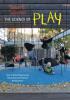
The Science of Play: How to Build Playgrounds That Enhance Children’s Development was written by Susan G. Solomon. The book uses recent data from the behavioral sciences to demonstrate how to design innovative, multifunctional spaces to allow children to take risks, experience failure but also have a chance to master difficult tasks, learn to plan and solve problems, exercise self-control, and develop friendships.
The Step2 Company

The Step2 Company is a manufacturer of preschool and toddler toys, garden and outdoor furniture products, and rotationally molded plastics. As part of The Step2 Holding Company, LLC, their mission is to create products that "build imagination and enrich the family's celebration of childhood."
The Strong

After a lifetime of collecting dolls and toys, in 1968 Margaret Woodbury Strong created the Margaret Woodbury Strong Museum of Fascination in her home in Rochester, New York. For more than a decade Margaret had been conducting official and unofficial tours of her collections, so she named the official museum after the way her guests would often describe her collections. She hoped her museum would "fascinate, educate, and entertain."
The Toy Association
The Toy Association, Inc. is the not-for-profit North American trade association representing all businesses involved in creating and delivering toys and youth entertainment products for kids of all ages headquartered in New York, NY.
The Well-Played Game
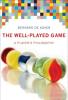
The Well-Played Game: A Player’s Philosophy was written by Bernard DeKoven and published in 2013. This updated book was originally published in 1978 and became a classic treatise on how human beings play together.
Theme Play

A form of symbolic play, in theme play children pretend to take on roles of others they have observed from earlier situations. Using theme ideas complete with dress-up costumes and props adds to their development.
Themed Concepts

Themed Concepts creates custom Glass Fiber Reinforced Concrete (GFRC) play and nature features for playgrounds, water parks, zoos, museums, aquariums, restaurants, amusement centers, hotels, and religious centers. Based in Forest Lake, Minnesota, they believe that “If it can be imagined, it can be built.”
Themed Recreation Company
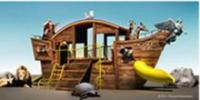
Themed Recreation Company creates themed playgrounds, stand-alone play and climbing structures, icon play and brand sculptures, and spray or misting play pieces. Their material of choice to use in the fabrication process is GFRC (glass fiber reinforced concrete).
Theora Design
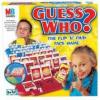
Theora Design is a business that creates and designs toys, games, crafts, dolls, electronic games, and novelties. They also collaborate with other toy and game inventors and encourage young entrepreneur designers. While others fear the electronic age has ended games, Theora Design believes that games are "enjoying a renaissance" as "people seek avenues for interacting with each other."
Therapeutic Value of Play

Play can be very therapeutic for children. Play is a way of removing stress and having fun. Play implies freedom, safety, trust, and a sense of well-being. Adding play to children's lives leads to less depression, less anxiety, less stress, and less aggression. Play is fundamentally important for the emotional health of children and is a way for them to express emotion that cannot be said with words.
Thompson, Donna

Physical education professional, Donna Thompson, founded the National Program for Playground Safety (NPPS) in 1995. Donna Thompson has been involved in playground safety research, education, and consulting. As Donna's interest in playgrounds became more and more focused on playground safety, she became involved in the establishment of safety standards.
Tinkertoy
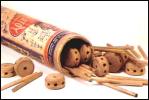
A classic children’s toy that has lasted for over 100 years, Tinkertoy construction sets feature spools and rods that were designed with mathematical principles in mind to allow children to build sturdy structures during their constructive play.
Tonka Corporation
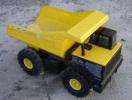
Tonka Corporation began in 1947 as Mound Metalcraft Incorporated. They first began manufacturing steel toys and developed a large line of steel toy trucks among other products.
Tootsietoy
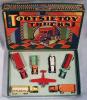
Tootsietoy brands itself as America’s Oldest Toy Company. The best known toys under the Tootsietoy name were a variety of die cast transportation toys made popular in the 1930s and 1940s.
Toys "R" Us
Charles Lazarus, the founder of Toys "R" Us, began selling baby furniture in 1948 in Washington D.C. Aiming for the post World War II baby boom market, Charles soon added rattles, cradle gyms, stuffed animals, tricycles, books, and toys. He called the store the Children's Bargain Town.
Tree Climbing

Children naturally love to climb trees. If they find a tree with numerous branches that is accessible to climb, they will start their ascent to explore the heights above. Climbing is an activity that children enjoy from an early age. Most children find climbing fun and strive to accomplish reaching the highest point possible to view the world around them.
Triax 2000
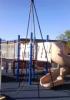
The Triax 2000 Surface Impact Tester (SIT) is a portable, free-fall playground surface impact tester. Children falling from playground equipment account for 79% of all playground equipment related injuries each year. The Triax 2000 is used to assess the safety of the surfacing below the playground equipment based on the height of the equipment.
TTPM

TTPM is an inclusive resource for the latest toys and games, children's books, electronic games, family movies, sporting goods, and "all things play" where consumers can research and find the best playthings.
TÜV SÜD America

TÜV SÜD America is a technical inspection company that provides third-party safety testing, inspection, and certification services.
Tyco Toys

Tyco Toys began in 1926 in Mantua, New Jersey, when two friends, James P. Thomas and John N. Tyler, formed the Mantua Toy Co. to manufacture wood and metal model sailboats. Their first product, a 3 foot cabin cruiser featuring a small electric motor, was offered in 1927.
