
D
Dattner, Richard

Once known as one of the “Young Turks of radical urban playground design,” Richard Dattner is an architect who has been leading the innovative curve of architectural design for both playscapes and public buildings for over 50 years.
Davis, Roger
Co-founder of Playground Safety Services Incorporated (PSSI), Roger Davis believes in "SAFE Outdoor Learning Environments for ALL" and has made "Play it Safe!" the motto of his company.
He is also the President of PlaySpection, a division of PSSI-Playstruction that produces playground audit and inspection software.
Decade for Childhood
The Association for Childhood Education International (ACEI) and Alliance for Childhood joined together to launch a 10-year initiative, the Decade for Childhood 2012-2022. The Decade for Childhood invites individuals and organizations to join their global initiative to work with others to create positive conditions in which all children can grow with hope, joy, freedom, and promise for the future.
DeGroot, Edward

A key player in the playground movement, Edward DeGroot developed Chicago's South Parks and served on several Playground Association of America committees. Edward DeGroot was a firm believer in the recreational need of sports for youth and promoted the creation of the sport of softball, first known as playground ball.
DeKoven, Bernie

Calling himself a "Fun-theorist," Bernie DeKoven designed, taught, and wrote about games. Bernie DeKoven was a play advocate who authored books and developed games including video games.
Delivering Good

Delivering Good (formerly known as Kids in Distressed Situations) is a nonprofit organization that turns donated product from the fashion, home, and children’s industries into hope and dignity for millions of people impacted by poverty and natural disasters every year.
Design & Play: Imagination Needs Places to Thrive
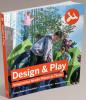
Design & Play: Imagination Needs Places to Thrive was written and edited by Sam Aquillano and Amanda Hawkins and published by Design Museum Press in 2017 as a publication to accompany the exhibition Extraordinary Playscapes, curated by Design Museum Foundation.
Design for Play
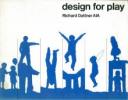
Richard Dattner wrote Design for Play, an illustrated book of play spaces and philosophies which create an "environment where play, learning, and the human spirit are nurtured."
Designated Play Surface
As defined by the U.S. Consumer Product Safety Commission, a designated play surface is any elevated surface greater than 2 inches by 2 inches that a child might access and attempt to play on. Guardrails, handrails, and posts pose a potential hazard if a child should fall from a greater height than the playground surfacing is designed to protect.
Destination Playgrounds
Destination playgrounds are typically larger playgrounds set in a location that may require a drive to reach. Destination playgrounds draw crowds from surrounding areas for their unique themes and offerings for a wide range of children and adults alike.
Detroit Mower Gang
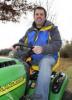
The Detroit Mower Gang was formed to rescue abandoned parks in the city of Detroit, Michigan. Because of the economic downturn that greatly affected Detroit in 2009, city government was strapped to sufficiently maintain many of the public city parks. Rather than allow them to be overrun with weeds and become unusable for children, Tom Nardone decided to do something about it, one park at a time.
Detroit Testing Laboratory

From 1995 until 2010 International Play Equipment Manufacturers Association worked with Detroit Testing Laboratory to provide third-party physical validation of compliance with the ASTM International safety standards for playground equipment and playground surfaces.
Developmental Physical Education for All Children

Developmental Physical Education for All Children was written by David L. Gallahue and Frances Cleland Donnelly to prepare future teachers to teach physical education using a student-focused, developmentally appropriate approach.
Dewey, John

John Dewey was one of the most significant educational theorists of the early twentieth century. He was a philosopher, social reformer, and educator who explored the ideas of experience and reflection, democracy and community, and environments for learning.
Dickie, George

An early playground and recreation leader, George Dickie was influential on the city, state, and national levels. George Dickie was the executive secretary of the Federal Inter-Agency Committee on Recreation.
Directional Awareness

Directional awareness is one of many perceptual motor skills that children learn as they become mobile. Motor skills are combined with perceptual, sensory skills, such as visual, auditory, and tactile abilities, to develop increasingly complex behaviors.
Dodgeball

The game of dodgeball has been a popular childhood activity on the school playground as well as in physical education classes for years. The object of the game of dodgeball is to avoid being hit by balls thrown by opponents while attempting to eliminate the other team's players by hitting them with balls.
Dog-ON-it-Parks

Founded in 2008 by Kathy and Gary Max, Dog-ON-it-Parks designs, manufactures, and installs dog exercise equipment, dog park furnishings, and dog park accessories.
Dramatic Play

Dramatic play is a form of symbolic play where a child pretends to take on a role of someone else, imitating actions and speech from earlier observed situations. The elements of reality and make-believe are involved as children imitate real-life people and situations they have experienced.
Drawstrings
Drawstrings, particularly on hoods and necks of children's clothing, can become entangled on playground equipment and cause death by strangulation. The U.S. Consumer Product Safety Commission has been very active in bringing this hazard to the attention of consumers and to the clothing industry.
Duncan Toys

The Duncan name is synonymous with the yo-yo which began with Pedro Flores in 1928 and his Yo-Yo Manufacturing Company. As an immigrant to the United States, Pedro thought of marketing the Philippine traditional wooden toy, the "yo-yo," which he played with as a child.
DuraPlay Inc

DuraPlay is a rubber poured-in-place safety surfacing company based in Wimberley, Texas. They provide safe fall surfaces for playgrounds, theme parks, and childcare centers addressing the reality that 75%-80% of playground injuries result from falls to unsafe surfaces.
Dynamo Playgrounds

Dynamo Playgrounds has been in business since 1993. Their playground equipment is based on the principles of motion, energy, and teamwork, and they manufacture playnets in many sizes and configurations.
