
E
EarlySpace

A play and landscape design company, EarlySpace creates natural play spaces, outdoor classrooms, and sustainable landscaping for homeowners, schools, and children's programs. Nancy Striniste founded EarlySpace in 1989.
EarthPlay

Based in Spencer, New York, EarthPlay assists communities in designing, planning, and building natural playscapes. EarthPlay designs are filled with hills, pathways, trees, sand, water, music, and much more where children can run, climb, dig, and pretend.
EcoPlay Playgrounds

EcoPlay Playgrounds is a commercial playground design, manufacturer, and installation company that offers the EcoPlay products of play structures, swings, and site amenities made from post-consumer, recycled HDPE plastic (milk jugs). The company, originally known as Safeplay Systems, was founded in 1989 and is based in Marietta, Georgia.
Education By Plays and Games

George E. Johnson wrote Education By Plays and Games in 1907 to "help promote a wider and higher appreciation of play and of its value in education, and add somewhat to the sum of child happiness in the world."
Education Through Play
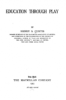
Written by Henry S. Curtis in 1915, Education Through Play discussed the issue of children's play as it was viewed at that time. Education Through Play suggested that play should be included in the child's school day.
Edwardson, Paul

Paul Edwardson has had a long career in the parks and recreation field and has been especially concerned with playground safety and maintenance.
Elephant Play

Elephant Play was founded in 1994 in Montreal, Canada, by Serge Morin and Yvan Cinq-Mars. Combining their talents to design playground equipment, their goal was to develop new and innovative post and deck systems that offer products that entice children to move, increase their play value, and still be safe and accessible.
Elkind, David

A child psychologist, educator, speaker, and author, Dr. David Elkind has built on and furthered the works of biologist and child psychologist, Jean Piaget. Dr. David Elkind has focused on the cognitive, perceptual, and social development of children and adolescents with an emphasis on what constitutes healthy development.
Emotional Development

Emotional development refers to the ability to recognize, express, and manage feelings at different stages of life and to have empathy for the feelings of others. Emotional development is largely affected by relationships with parents, siblings, and peers.
Empathy

Empathy is an emotion that can be defined as knowing what another is feeling, feeling what another is feeling, and responding compassionately to another's distress. Prosocial behaviors, such as helping, sharing, and comforting others illustrate the development of empathy.
Empower Playgrounds Inc
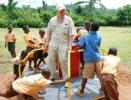
The nonprofit organization, Empower Playgrounds, Inc. (EPI), is providing electricity-generating playground equipment to villages in Ghana that are too remote to be on their nation's electricity grid. The playgrounds of Empower Playgrounds recharge batteries for LED lanterns to light children's homes so they can do their homework.
Encyclopedia of Play in Today's Society

Encyclopedia of Play in Today’s Society is a two-volume book that offers over 450 entries about play. This set contains a wide variety of topics including the leisure and recreational activities of children and adults throughout history as well as specific games, toys, and amateur sports they enjoy.
Enderis, Dorothy

Known as "The Lady of the Lighted Schoolhouse," in the early 20th century Dorothy Caroline Enderis developed leisure time recreation into an internationally recognized program that "demonstrated what a city can do to help its people live happy lives."
Endurance

Endurance is defined as the ability to continue despite fatigue or difficult conditions. The stamina to perform physical activities for longer periods of time can be improved by exercise and increasing the amount of activity. This will result in developing stronger muscles, reducing body fat, and lessening the risk of developing diabetes or high blood pressure.
Engineered Wood Fiber

Engineered Wood Fiber (EWF) is an economical playground surfacing that is made of processed wood that is ground to a fibrous consistency randomly sized typically to not over 2" in length.
English, Charles H
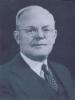
In the early twentieth century, Charles H. English was a recreation leader who was known for being resourceful and innovative in creating recreation programs.
Entanglement

The condition in which the user's clothing or something around the user's neck becomes caught or entwined on a component of playground equipment is called entanglement. The causes of entanglement include projections, protrusions, and open hooks, such as "S" hooks and gaps, that could entrap a child's clothing.
Entrapment
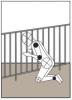
Entrapment is defined as "any condition which impedes withdrawal of a body or a body part that has penetrated an opening." Many types of gaps can be found on playground equipment that could result in some type of entrapment.
Equilibrium

Equilibrium is the state of balance acquired when contending forces are equal. The "sense of equilibrium" involves having a sense of security when standing, walking, or performing any movement. A number of factors are involved in equilibrium of the body, including visual cues, tactile kinesthetic sensations, and vestibular (inner ear) stimulation.
Equipment Height

Playground designers view equipment height as an important factor in making playground equipment interesting and challenging. The proper equipment height is considered for safety as well.
Erikson, Erik
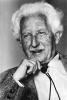
Erik Erikson was a renowned psychoanalyst who proposed that children were products of society’s expectations, prejudices, and prohibitions. His best known work is his theory that each stage of life is associated with a specific psychological struggle, which contributes to a major aspect of personality.
Etch A Sketch
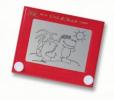
Manufactured by the Ohio Art Company, the Etch A Sketch is a mechanical drawing toy that has been a popular classic toy for over 50 years. The invention of the Etch A Sketch is traced to an electrician in France by the name of Andre Cassagnes.
Everlast Climbing Industries
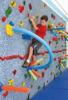
As part of the PlayCore family, Everlast Climbing Industries designs and manufactures indoor and outdoor climbing walls and handholds for all ages. Everlast Climbing Industries makes regular traverse walls, top rope climbing walls, freestanding climbing walls, and specialty climbing walls.
Executive Function

The ability to think and control emotions is called executive function. As young children learn to order their thoughts, process information, remember details, and focus on tasks amid distractions, they are developing their executive function skills.
Exercise

Physical exercise is the performance of some activity in order to develop or maintain physical fitness and overall health. For children, exercise is playing and being physically active. The American Heart Association recommends that children have at least 60 minutes of moderate to vigorous physical exercise every day.
Exploration Playgrounds
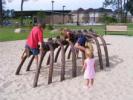
Peter May began Research Casting International, a museum technical services company that creates life-sized models of fossils. Having made molds for museums all over the world, Peter and Matt Fair realized that these molds could be used with children. In 2009, Peter and Matt founded Exploration Playgrounds.
Eye-Hand Coordination

The ability of the vision system to coordinate the movement of the hands to perform a task is called eye-hand coordination. Children's eye-hand coordination skills improve as they play with toys, blocks, puzzles, and balls.
