
S
S.A.F.E.
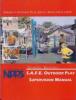
The National Program for Playground Safety (NPPS) was created in October of 1995 to help communities across the nation examine the critical issues surrounding playground safety. S.A.F.E. is an acronym created by NPPS and used in its National Action Plan to help the public create safe play environments for children.
SAFE and Fun Playgrounds: A Handbook
SAFE and Fun Playgrounds: A Handbook was written by Heather M. Olsen, Susan D. Hudson, and Donna Thompson. The book gives important guidelines in planning playgrounds that are safe and engaging.
Safe Kids USA

Safe Kids USA started as the National SAFE KIDS Campaign, a U.S. nonprofit organization, which was founded by Martin R. Eichelberger, M.D. and Herta Feely in 1988. Dr. Eichelberger, as head of the emergency trauma unit at the Children's National Medical Center in Washington, DC, saw many injuries to children that could have been prevented.
Safe Kids Worldwide

In 2004, representatives from 14 countries joined Safe Kids USA to create a global non-profit global organization called Safe Kids Worldwide, which is located in Washington, DC. In 2010, they had 19 member countries across the globe. The mission of the organization is to "work together to educate families, create safer environments, and advocate for improved laws to protect children."
Safe Routes to School National Partnership
Safe Routes to School (SRTS) National Partnership is a network of organizations dedicated to creating "safe, convenient, and fun opportunities for children to bicycle and walk to and from schools." In doing so, they seek to reduce traffic congestion, improve the air quality around schools due to the reduction of traffic, and to increase children's activity and thereby reduce the risk of obesity and obesity-related health problems.
Safeplay by Design

Safeplay by Design is a company focused on safe play spaces through playground designs and improvement plans, construction management for parks and similar projects, safety inspections for playgrounds and sports fields, impact testing, safety training and inspection programs, and playground surface safety scanning.'
Safety Play, Inc
Safety Play Inc. is a company that offers safety services and products for playgrounds, sports fields, and recreation areas. They offer safety inspections and audits, safety classes and programs, inspection tool kits and signs, play space planning and designing, and expert witness services.
Safety Sense at Play
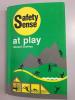
Safety Sense at Play was written by Heward Grafftey. The book covers the safety issues involved with a wide range of sport recreational activities enjoyed by children and adults. The book is intended to be a reference book that explains why accidents occur and what steps can be taken to prevent them.
Sajai Foundation

The Säjai Foundation was formed in 2006 by Barb King to "educate and motivate youth ages 6 to 11 to make healthy choices that will serve them for a lifetime." As a Minnesota based nonprofit organization, the foundation works with local communities in educating children to include "healthy eating, physical activity, and outdoor exploration" in their lives.
Sallis, James

Dr. James Sallis is a Professor of Psychology at San Diego State University and directs the Robert Wood Johnson Foundation's Active Living Research Program. With a bachelor's degree in Business Administration and Psychology, a master's degree in Psychology, and a doctorate degree in Clinical Psychology, Dr. Sallis has researched and written extensively on physical activity and human behavior.
Sand
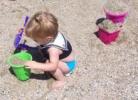
Playing with sand encourages the imagination and creativity of children. Using shovels, buckets, and other containers and toys, children have an endless number of opportunities for exploratory play. Playing with sand includes sensory, cognitive, social, and therapeutic benefits.
Sand Gardens
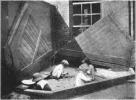
Sand play areas for children in large cities were originally known as sand gardens and were subsequently called playgrounds as their popularity increased. The introduction of sand gardens in Boston in 1886 has been credited as the beginning of the playground movement in America.
Sandbox Summit

Sandbox Summit is a series of conferences that undertake the mission to discover how technology affects the ways children play, learn, and connect with others. As technology becomes more pervasive in the lives of children, the goal of Sandbox Summit is "to ensure that the next generation of players becomes active innovators rather than passive consumers of technology."
Savage Park
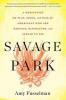
Savage Park, A Meditation on Play, Space, and Risk for Americans who are Nervous, Distracted, and Afraid to Die written by Amy Fusselman explores the dangers of America's obsession with safety and discovers that the desire for a risk-free life to insulate from pain also insulates from real joy.
Scaffolding
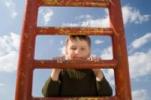
Scaffolding is an instructional technique that provides support to a learner to build on his prior knowledge helping him internalize new concepts or perform more difficult tasks. The assistance provided by a more knowledgeable person to help another learn to perform a task is a temporary framework that is gradually removed as the learner masters the task.
School Specialty

School Specialty is an education company that provides proprietary products, programs, and services to help educators engage and inspire students of all ages and abilities to learn. The company designs, develops, and provides preK-12 educators with curriculum, supplemental learning resources, and school supplies.
Schoolyard Habitats

Sponsored by the National Wildlife Federation, the Schoolyard Habitats program reconnects children to nature through outdoor classroom environments that attract and support local wildlife. Wildlife habitats on school grounds encourage students to use their academic skills, curiosity, and creativity to learn about local ecosystems and wildlife species.
SciPlay
The New York Hall of Science (NYSCI) launched The Sara Lee Schupf Family Center for Play, Science, and Technology Learning (SciPlay) in September 2010. Sara Schupf created the Center to engage more children with science concepts and scientific thinking through outdoor playgrounds.
Seasons of Play
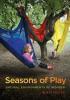
Seasons of Play: Natural Environments of Wonder was written by Rusty Keeler and published by Gryphon House, Inc. in 2016. The book contains over 200 photographs of the natural outdoor environments of three home-based preschools.
Self-Esteem
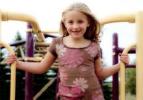
Self-esteem can be defined as what a person's unconscious believes to be true about his value, worthiness, and competence. Messages received from others are unconsciously accepted as facts no matter how legitimate or based in reality they are. Therefore, one's self-esteem is continuously constructed and reconstructed by others' verbal and non-verbal messages.
Self-Regulation

Self-regulation is the ability to control and manage one's own thoughts, feelings, and actions. For a child, good self-regulation can be demonstrated simply by raising his hand when asking a question in class or in a more complex way by controlling his feelings when angry or frustrated.
Sensorimotor Stage
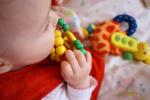
The sensorimotor stage is the first of four stages proposed by Jean Piaget to describe the cognitive development of infants, children, and adolescents. The sensorimotor stage typically describes children’s cognitive development from birth to 2 years of age.
Sensory Development
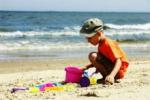
The interaction of the mind and the body comes through the experiences of the senses. Countless amounts of sensory information enter the brain all the time from not only the eyes and ears, but also from every area of the body. The brain organizes and integrates all of these sensations to help the person function normally.
Sensory Processing Disorder

The way the nervous system receives messages from the senses and turns them into appropriate motor and behavioral responses is referred to as sensory processing. Sensory input is received and understood through sights, sounds, touch, tastes, smells, movement, balance, body position, and muscle control.
Shane’s Inspiration

When Shane Alexander was born to Catherine Curry-Williams and Scott Williams in 1997, he was diagnosed with Spinal Muscular Atrophy, which prohibited him from moving or breathing on his own. He died a few weeks later from this genetic disorder. Had he lived, he would have been confined to a wheelchair. Shane's Inspiration is one of the first Universally Accessible Playgrounds (UAP) in the Western United States and one of the largest in the nation.
SHAPE America

SHAPE America (formerly known as AAHPERD) is an organization of physical education and activity, sport, dance, and school health professionals. Standing for Society of Health and Physical Educators, they coordinate resources, compile standards, promote research, award excellence, and host conferences and workshops. Previous to December 2013 SHAPE America was known as the American Alliance for Health, Physical Education, Recreation and Dance.
ShapesInShape

Shlomi Golan founded ShapesInShape, Inc., a fitness research firm and developer of exercise programs, in 2000. As a Certified Personal Trainer (CPT) from the National Academy of Sports Medicine, Shlomi conducted research on wellness and effective exercise programs.
Shock Absorbing
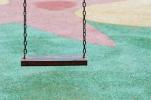
In the context of playgrounds, "shock absorbing" refers to the properties of the protective surface that assist in preventing or minimizing injuries. Shock absorbing is also referred to as "impact attenuating" as it relates to playground surfacing.
Signs and Labels
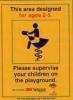
Signs and Labels on and around playground equipment provide safety information on playgrounds. Some signs are for information, some are for warning, and some are for user education. Signs should be placed at the entrance to the play area or in a conspicuous location on the equipment. Freestanding signs must be near the play equipment entrance but outside of the use zone.
Singer, Dorothy

An advocate for play, Dorothy Singer is a research scientist, professor, consultant, and author who focuses on early childhood development, the effects of television on youth, and the importance of imaginative play. Dorothy Singer co-edited the book Play=Learning: How Play Motivates and Enhances Cognitive and Social-Emotional Growth.
Skateboard
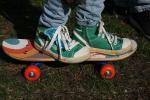
A skateboard is a wooden board with four wheels attached to the underside. The skateboard is ridden in a standing position that is propelled forward by pushing off with one foot or by the force of gravity on a slope.
Skenazy, Lenore

New York City-based Lenore Skenazy is a syndicated columnist constantly examining the curious realities of daily life. "Free-Range Kids" is a phrase and a movement Lenore created and promoted through a blog, a book, and speaking engagements. She has become a voice to "start renormalizing childhood" and to realize that "Kids are competent, kids are capable."
Sledding
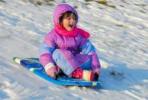
Sledding is a popular winter activity for the whole family. Since sleds are relatively inexpensive and snow-covered sledding hills are free, sledding provides a great opportunity for children to enjoy the outdoors and nature while offering good physical exercise and fun.
Slinky
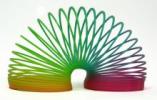
The Slinky toy has been enjoyed by generations of children since its introduction in 1946. It is a simple toy made of a coiled spring that is advertised with words to describe the many actions children can make it do: walk, bounce, spring, juggle, flip, and jiggle.
Slow Family

Susan Sachs Lipman (Suz) created the Slow Family blog and the Slow Parenting movement to help busy parents reconnect with their families and their passions through fun activities in nature and at home. She believes that "the Slow Movement is not necessarily about slowing (though it can be)."
Slyde the Playground Hound
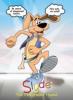
Slyde the Playground Hound is a character created by Curtis Stoddard to teach playground safety awareness to children ages 2-12 years of age. As a playground contractor, Curtis observed that, for all the strides the playground industry had made for manufacturing and installing playgrounds that are safe, there was still a lack of understanding about the inherent dangers of playgrounds by the users- children.
Smilansky, Sara
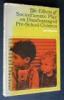
Developmental psychologist Dr. Sara Smilansky is best known for her work on play training and its effects on children. She proposed four types of play, which contribute to a child's development and learning: functional play, constructive play, games with rules, and dramatic or pretend play.
Smith Memorial Playground and Playhouse
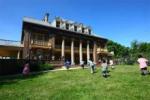
Built in the late 1890s, Richard and Sarah Smith set up a trust to create the play mansion and playground in memory of their adult son, Stanfield. Philadelphia's Smith Memorial Playground and Playhouse offers unstructured creative play for children of all abilities ten years and younger.
Snug Play
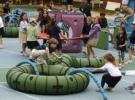
Snug Play manufactures large-scale, manipulative loose parts for play designed for indoor or outdoor play spaces. Snug Play offers nine play elements: the bump, cone, wave, wall, noodle, spider, pad, mound, and full loop. These tactile elements combine soft and rigid play surfaces that are durable and weather-resistant that can be easily linked together offering open-ended play.
Soccer
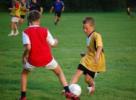
Soccer is a simple team sport that is enjoyed by children as young as three years of age. The game is an inclusive activity that involves children of varying shapes and size, since the physical size of the players is not an important factor in their success as players.
Social Development
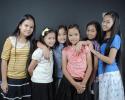
Social development involves learning the knowledge, skills, and values that enable children to relate to others effectively. The ability to get along with others and adapt to new situations is referred to as social competence.
SofSURFACES Inc
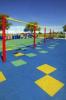
SofSURFACES Inc. designs, manufactures, distributes, and installs fitness center flooring, roof tops, and playground safety surfacing. They produce an impact attenuating, interlocking surfacing tile system manufactured from recycled rubber. Their tile system offers durability, fall protection, long term value, and a secure system to eliminate vandalism.
Soft Play
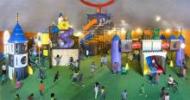
Offering both indoor and outdoor commercial contained play equipment, Soft Play, a division of PlayPower, Inc., features small standard play systems, free standing play products, toddler designs, and large custom themed play systems. They also offer motion components, age zoned play areas, visual open play, and electronic play rooms in contained play spaces.
Softline Solutions

Softline Solutions is a provider of rubber surfaces and rubber products. Using recycled materials, Softline Solutions offers products for playgrounds, daycares, running tracks, schools, and other facilities.
Sof’Solutions

Originally known as Sof-Fall, Sof'Solutions offers a variety of products to meet different needs in several venues. For outdoor playgrounds, they have engineered wood fiber as well as engineered rubber and interlocking play mats. They also have interlocking mats for childcare centers, indoor recreation facilities, and gyms.
Solitary Play
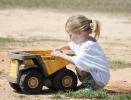
Solitary play, also known as independent play, is one of the earliest stages of play where children play alone because they have not developed socially to be able to play with others yet or because they choose alone time.
Sorensen, Carl Theodor
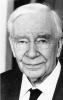
Carl Theodor Sorensen is considered one of the greatest landscape architects of the 20th century. He is best known for creating the first adventure playground along with schoolteacher Hans Dragehjelm in Emdrup, Denmark, in 1940.
Sound Play

In 1982, Bond Anderson developed the musical playscape: a permanent outdoor installation of tuned musical instruments built to stand up to the weather and designed for the durability a playground setting requires. The musical instruments designed by Sound Play are designed to be played at parks, school grounds, museums, and backyards.
SPARK

The Sports, Play, and Active Recreation for Kids (SPARK) team of researchers and educators are focused on growing a healthier next generation of children through the development of healthy lifestyles, social and personal skills, motor skills, and movement knowledge.
Spatial Awareness
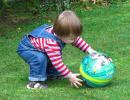
Spatial awareness is the knowledge of how much space the body occupies and how to use the body in space. It is one of the perceptual motor skills that children develop to be able to interact with the environment by combining the use of the senses and motor skills.
Spease, David

Drawing on his 40 plus years of experience, David Spease is a landscape architect, contractor, playground safety instructor and inspector, teacher, lecturer, and CEO of Safeplay by Design, Inc. David is committed to safely designed play spaces, safety inspections and trainings, impact testing, and synthetic sports field testing.
Specialized Movement Phase
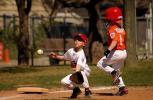
The specialized movement phase typically begins around age seven when children begin to develop a keen interest in sports. Proper development of fundamental movement skills combined with more precise movement skills are necessary to be able to efficiently develop specialized movement skills.
Spock, Michael
Michael Spock began his career as the Director of the Boston Children's Museum in 1962. His unconventional educational background led him to approach revitalizing the museum with an experiential and informal platform.
Stoddard, Curtis

Passionate about children's play, playgrounds, and safety, Curtis Stoddard has a long history as a play advocate, playground contractor, and safety instructor. Curtis Stoddard was one of the founders of the National Playground Contractors Association as well as Play and Playground Encyclopedia and Play and Playground Magazine.
Strength
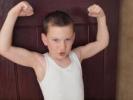
Muscular strength is the ability of the body to exert a maximum force against an object external to the body in one maximum effort using the body's muscles. Children do much to enhance their physical strength by engaging in daily active play.
Suk, Michael

Dr. Michael Suk has spoken to over 100 organizations on the importance of increasing personal fitness and becoming healthier. He is a strong advocate for play and has presented medical research findings on the benefits of play, especially playing outdoors in nature. He believes that, "simple outdoor activities such as hiking, biking and camping on public lands and waters can serve as a gateway to a healthier lifestyle."
SuperBall

The SuperBall is a small synthetic rubber ball that has the ability to bounce higher and longer than ordinary bouncing balls. When the SuperBall was introduced in the summer of 1965, it became an instant hit with children and adults alike who were fascinated with its amazing properties.
Superhero Play
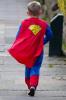
Superhero play is a form of imaginative, dramatic play where children use costumes, props, or action figures to imitate the superheroes they admire. Children are drawn to the power, strength, and special attributes of superheroes and engaging in superhero play helps them feel empowered and in charge of their world.
Surface America

As a subsidiary of ECORE International, Surface America installs playground surfacing on approximately 500 playgrounds annually as well as gymnasium flooring, fitness flooring, indoor and outdoor surfacing, and trail and pathway surfacing. They recycle rubber to manufacture poured-in-place surfacing, rubber tiles, and synthetic turf.
Suspended Hazards
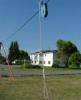
A suspended hazard is a non-rigid component such as a cable, wire or unattached swing chain that is suspended between play structures or from the ground to the play structure that is within 45 degrees of horizontal, unless it is above 84 inches and is a minimum of 1" wide at its widest point.
Sustainable Sites Initiative

Sustainable Sites Initiative (SITES) promotes land development and management practices that are sustainable through generating less waste, minimizing impact on the landscape, and by using less energy, water, and natural resources.
Sutterby, John

Dr. John Sutterby is an associate professor at the University of Texas at Brownsville and a leading outdoor play advocate for child development and societal justice. One of his concerns is the inequity of park and play space locations for underserved communities.
Sutton-Smith, Brian
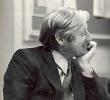
As a lifetime student of play, Brian Sutton-Smith was one of the foremost play theorists of his time. With over sixty-five years observing, researching, and teaching in the fields of educational psychology and play theory, his work resulted in more than 350 books and articles that are stored at the Brian Sutton-Smith Library and Archives of Play located at The Strong in Rochester, New York.
Swimming
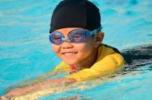
Whether trying to cool off in warm weather or competing in a sporting event, swimming is enjoyed by children and adults alike and is listed as the second most popular sports activity in the United States. Swimming is great exercise, offers physical and mental health benefits, and is fun for the whole family.
Swing Safety
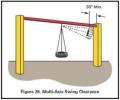
Swing safety is a very complex issue. There are three different types of swings, placement requirements, use zone requirements, requirements for the type of fasteners and suspending elements, and surfacing requirements that must all be taken into consideration.
Swing-N-Slide

Founded in 1985 as a company producing do-it-yourself wooden home playground equipment kits, Swing-N-Slide developed over the years to include commercial playground systems. Swing-N-Slide continues to provide families with do-it-yourself options in planning their backyard or community play spaces.
Swinging
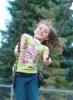
Children through the years have enjoyed swinging, whether on the playground, at the park, or in the backyard. The back and forth motion of the swing can be both relaxing and exciting depending on the child's play motivation. The sensations of flying and falling make swings one of the most popular pieces of equipment on the playground.
Symbolic Play

Symbolic play is the ability of children to use objects, actions or ideas to represent other objects, actions, or ideas as play. A child may push a block around the floor as a car or put it to his ear as a cell phone. At around 8 months of age, as their symbolic thinking develops, children become familiar with objects, actions, and ideas through observation and exploration.
