
H
Hall, G Stanley
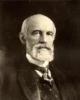
G. Stanley Hall was the leader in establishing psychology as a science and a profession in America in the late 19th century. He was also known as the "father of adolescence." Hall's resulting focus on the child study movement and educational reforms led him to identify play as the means "for making children and adolescents moral and strong."
Handcrafted Playgrounds
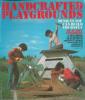
The book Handcrafted Playgrounds - Designs You Can Build Yourself was written by M. Paul Friedberg. The book is a sketchbook of designs based on the premises that anyone can build a playground and that the actual process of the building can be as important as the finished product.
Hands-on-Nature Anarchy Zone
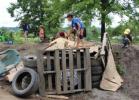
The Hands-on-Nature Anarchy Zone, an adventure playground at Ithaca Children’s Garden (ICG), is a partnership with the U.S. Fish and Wildlife Service in Ithaca, New York.
Hanmer, Lee F

Lee F. Hanmer, sometimes called an "educational missionary for playgrounds," was influential in the recreation and playground movement early in the 20th century. Lee was an effective and industrious leader in organizations such as the Playground Association of America, the Russell Sage Foundation, the Boy Scouts of America, the Recreation Alliance, and the War Department Commission.
Hasbro

From manufacturing pencil boxes in 1923, Hasbro has developed into primarily a toy company with Mr. Potato Head and G.I. Joe as early successful products.
Head Injury Criteria
Head Injury Criteria is a measurement of the time duration of head deceleration during impact. A mathematical formula is used to derive a value known as Head Injury Criteria or HIC. The value of HIC with regard to the impact on a playground surface may not be more than 1000.
Head Start Body Start
Head Start Body Start National Center for Physical Development and Outdoor Play (HSBS) is dedicated to promoting physical activity, outdoor play, and healthy lifestyles for young children and their families.
Health

The World Health Organization has defined health as "a state of complete physical, mental and social well-being and not merely the absence of disease or infirmity." Health has many determining factors, such as social, economic, and physical environment as well as the person's individual characteristics and behaviors.
Health-E-tips Inc

Health-E-tips Inc. is dedicated to reducing obesity and disease in the young and the old through "bite-sized" tools that make healthy choices a daily habit. Believing that prevention is the best cure, the company promotes the philosophy that the key to healthy living is good nutrition, daily activity, and a knowledge of health issues.
Healthy Kids Challenge

Healthy Kids Challenge (HKC) supports schools and communities in educating kids and their families to "Eat, Move, and Enjoy a Healthy Balance." This nonprofit organization utilizes school curriculum, workshops, presentations, events, and distance assistance tools, such as their website and newsletters. Their focus is on making healthy eating and active play practices become attractive, simple, and fun for kids.
Healthy Parks Healthy People US

Healthy Parks Healthy People US is a National Park Service initiative that is a "holistic approach to promoting the health and well-being of people and the sustainability of the planet."
Heart Rate

The heart rate is the number of rhythmic contractions, beats per minute (bpm), of the heart. This rate is used as a measure of cardiac activity. The normal heart rate should be strong and regular without any missed beats. Measuring heart rate is an effective way to determine the overall fitness of a person as well as the presence of any medical concerns.
Heath, Robert

Robert Heath was born in England, educated in Scotland, and worked in Australia before coming to the United States in 1968. While working as a commentator for equestrian events in the United Kingdom, Robert noticed how the shredded wood fiber in the training tracks and in the breeding sheds was "quiet and soft." He decided to bring the idea to the United States.
Henderson Recreation Equipment

Gordon C. Henderson founded the Henderson Recreation Equipment, Ltd. in Simcoe, Ontario, Canada in 1971. The company offers a full range of playground equipment including playground systems and freestanding play elements, such as swings, spinning events, and spring toys, as well as site amenities.
Hendy, Teri

Since 1987, Teri Hendy has been involved with developing, shaping, teaching, and promoting the safety standards through the ASTM International (ASTM) subcommittees, the U.S. Consumer Product Safety Commission, and the National Playground Safety Institute (NPSI). In 1988 she started Site Masters Inc, a business owned by women based in Cincinnati, Ohio.
Hermann, Ernst
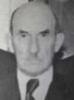
Ernst Hermann was an American pioneer in recreation planning, industrial recreation, and playground administration during the first few decades of 1900. He also taught concerning play, playgrounds, and recreation at Harvard University and concerning the Swedish physical education system at the Sargent School of Physical Education in Cambridge, Massachusetts.
Heseltine, Peter

Peter Heseltine is a playground health and safety consultant and playground industry author in the United Kingdom. He began as a Playworker and a Community Play Development Officer for local government. From there he became a Regional Play Adviser for a national charity and then the editor of UK's first play magazine, Play Times.
Hetherington, Clark W
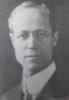
As a pioneer in the American play movement, Dr. Clark W. Hetherington was a philosopher, teacher, and physical education administrator at the university, state, and national levels. Dr. Clark W. Hetherington played an important role in defining and setting standards for the different types of playgrounds, the hierarchy of play leaders, the qualifications of playground leadership, and the organization and content of adequate training courses for play professionals.
Hewes, Dorothy W

Dr. Dorothy W. Hewes was an Early Childhood educator, professor, leader, and historian during the last half of the 20th century. She was the co-author of one of the first preschool administration textbooks and was known as the "Mother of the History of Early Childhood Education."
Hidden Dangers on the Playground
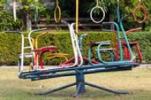
Playgrounds are intended to be fun, safe places to take children to visit and play. The National Playground Safety Institute (NPSI), a program developed under the National Recreation and Park Association (NRPA), identified twelve of the leading causes of injury on playgrounds known as "The Dirty Dozen."
HIGH FIVE

HIGH FIVE is Canada's quality standard for children's sport and recreation. The standard focuses on helping organizations enhance the quality of their sport and recreation programs and providing positive experiences for children - experiences that will remain with them for a lifetime.
Highlights
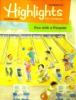
The Highlights magazine is a children's publication dedicated to assisting them in acquiring basic skills and knowledge, developing the ability to think and reason, fostering creativity, encouraging sensitivity to others, and choosing high ideals as a way of living.
Hill, Patty Smith
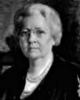
Patty Smith Hill (1868-1946) was a leader in the Kindergarten movement and an advocate of the value of free play in the education of young children. Although the theory and methods of Friedrich Froebel were accepted in most kindergartens at the time, Hill studied the work of other leading educators and challenged the practice of following Froebel's methods explicitly.
Hirsh-Pasek, Kathy

Dr. Kathy Hirsh-Pasek is the Stanley and Debra Lefkowitz Faculty Fellow in the Department of Psychology at Temple University and is a Senior Fellow at the Brookings Institution. Director of Temple University’s Infant Language Laboratory. She has researched and written in the areas of early language development and the importance of play for learning.
Hogan, Paul
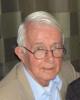
In 1958, Paul Hogan volunteered at his children's nursery school and was assigned the playground, which he found decrepit and unsafe. This began Paul's interest in designing, constructing, and improving playgrounds.
Holgate Toys

Holgate Toys is known for their colorful, durable, and quality made hardwood children's toys. As a division of Pepperell Braiding Company, all Holgate Toys are manufactured in Pennsylvania, making them one of the few exclusively made-in-America toy companies.
Home Safety Council

As a national non-profit organization, the Home Safety Council (HSC) is dedicated to preventing home-related injuries through educating the public. The Home Safety Council is a "leading source for home safety tips, checklists and information about home fire safety, falls prevention, poison prevention, water safety, child safety, disaster preparedness as well as many other home safety topics."
Homo Ludens
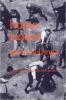
Homo Ludens: a study of the play element in culture was written in 1938 by Johan Huizinga, a Dutch historian who lived from 1872 to 1945. The title, Homo Ludens, translates to mean Man the Player.
Hopscotch
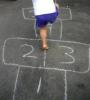
The children's game of hopscotch has been a popular playground activity for years. With the basic idea of not treading on lines, variations of the game are played around the world. The English name refers to hopping over the "scotch," which is a line or scratch in the ground. Lines are drawn in a variety of patterns of squares for the children to hop in with a particular order determined.
Hot Wheels

Hot Wheels is a diecast toy car brand manufactured by Mattel since 1968. Designed as miniature customized muscle cars, Hot Wheels are built for speed and can be raced on flexible, plastic tracks.
Huber, Rolf

Rolf Huber has been involved in inventing flooring and poured-in-place surfacing for running tracks, gym floors, and playgrounds. He has been a key player in setting standards for surfacing and promoting impact testing equipment.
Huizinga, Johan
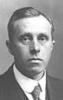
Johan Huizinga was a Dutch historian who lived from 1872 to 1945. His book, Homo Ludens: A Study of the Play Element in Culture, published in 1938, suggested the instinct for play as the central element in human culture and examined the role of play in law, war, science, poetry, philosophy, and art.
Hula Hoop

The hoop has been a popular children's toy for thousands of years, and the introduction of the Hula Hoop in 1958 by the Wham-O toy company has been documented by sociologists as one of the biggest fads ever to take hold in America and one of the most significant events of the time. Because of its enduring popularity, the Hula Hoop was inducted into the National Toy Hall of Fame in 1999.
