
N
'nPlay Foundation

Eric Cohen, Mike Maccia, Scott Hunter-Smith, and Steve Conner founded the not-for-profit 'nPlay Foundation in 2008. They joined forces to establish "the professional athlete's foundation for the prevention of childhood obesity." 'nPlay was put together to unite the athletes of the sports world to fight the children's obesity epidemic.
National Association for Recreational Equality
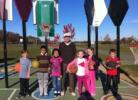
The National Association for Recreational Equality (NARE) was formed in 1997 by Dr. Reeve R. Brenner to educate the public and advocate with communities concerning the need for non-aggressive, fully inclusive sports and recreation.
National Association for Sport and Physical Education

The National Association for Sport and Physical Education (NASPE), headquartered in Reston, Virginia, is the largest of the five professional organizations within the American Alliance for Health, Physical Education, Recreation and Dance (AAHPERD) (now known as SHAPE America).
National Association for the Education of Young Children
The National Association for the Education of Young Children (NAEYC) began in 1926 when professional researchers and educators joined together to organize quality nursery schools. NAEYC's mission is "to serve and act on behalf of the needs, rights and well-being of all young children with primary focus on the provision of educational and developmental services and resources," birth through 8 years old.
National Association of Elementary School Principals

The National Association of Elementary School Principals (NAESP) was founded in 1921 in Atlantic City, New Jersey. What started with 51 principals grew in the next five years to include 3,000 members. Today NAESP, headquartered in Alexandria, Virginia, represents nearly 30,000 elementary school and middle school principals.
National Association of State Park Directors
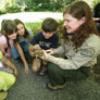
The National Association of State Park Directors (NASPD) was formed to advocate for state park systems in America. In 2009, NASPD launched America's State Parks to promote and advance the state park systems of America.
National Center for Injury Prevention and Control

In 1985, the National Research Council (NRC) and the Institute of Medicine (IOM) recommended that the Centers for Disease Control and Prevention (CDC) establish a program addressing the problem of injury directly. With funding from the United States Department of Transportation, the National Center for Injury Prevention and Control (NCIPC) was begun.
National Center on Accessibility

The National Center on Accessibility (NCA) was established at Indiana University in Bloomington in 1992. With support from the National Park Service, NCA promotes access for and inclusion of people with disabilities in parks, recreation, and tourism.
National Coalition for Promoting Physical Activity

The National Coalition for Promoting Physical Activity (NCPPA) is a network of organizations that are working together to establish policies that "improve the public's health and prevent and manage chronic diseases through increased levels of physical activity."
National Council of Youth Sports

The National Council of Youth Sports is a sports organization that promotes and supports organized amateur youth sport programs through advocacy, education, resources, trainings, research, and conferences.
National Electronic Injury Surveillance System

The National Electronic Injury Surveillance System (NEISS) is a national probability sample of emergency room visits involving injuries. From this sampling, a national estimate is made concerning the total number of injuries treated in hospital emergency rooms.
National Farm Toy Museum
Claire Scheibe, co-founder of the magazine Toy Farmer, and Dave Bell, president of ERTL Company, a producer of farm toy replicas, joined forces to create a farm toy museum in Dyersville, Iowa. Together they approached Dyersville Industries, Inc. about creating the National Farm Toy Museum (NFTM) to accommodate the growing farm toy industry and National Farm Toy Show.
National Institute for Play

The National Institute for Play was founded by Dr. Stuart Brown. Dr. Brown trained in general medicine, internal medicine, psychiatry and clinical research. He first realized the importance of play when studying a group of homicidal males. He concluded that the absence of play could have dangerous long-term consequences.
National Lekotek Center

Lekotek Centers facilitate interactive play experiences for children with special needs and their families. They make "the world of play accessible to children with all types of disabilities" through inclusive play sessions with adapted toys, traditional toys, books, and computers.
National Museum of Play
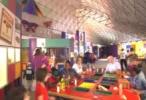
The National Museum of Play is one of America's largest history museums and the nation's second largest children's museum. With a vast collection of dolls, toys, and games, it is dedicated to exploring "play and the ways in which it encourages learning, creativity, and discovery and illuminates cultural history."
National Playground Contractors Association Inc

The National Playground Contractors Association Inc (NPCAI) is a non-profit organization started in February of 1997 in order to provide a support program and set standards for playground construction professionals. Originally the National Playground Contractors Association (NPCA), the organization was founded by six playground contractors: Dave Antonacci, Mike Baker, Paul Cullins, Mike Egan, Laz Gonzales and Curtis Stoddard.
National Playground Safety Institute

As members of the National Recreation and Park Association, Fran Wallach, Ken Kutska, and Monty Christiansen met with the NRPA Executive Director in 1989 concerning a training program to establish the playground safety standards of the ASTM International and the U.S. Consumer Product Safety Commission, which resulted in the development of the National Playground Safety Institute.
National Playground Safety Week

In 1997, the National Program for Playground Safety (NPPS) founded the National Playground Safety Week to occur each April, giving the nation a time to yearly assess playground safety and express gratitude to those who are making playgrounds safer. State governors are encouraged to proclaim National Playground Safety Week each year.
National Program for Playground Safety

The National Program for Playground Safety (NPPS) was founded in 1995 by Dr. Donna Thompson of the University of Northern Iowa with a grant from the Centers for Disease Control and Prevention (CDC). As a non-profit organization, NPPS is committed to research and safety education for both the public and the playground industry.
National Recreation and Park Association

The National Recreation and Park Association (NRPA) was created on August 14, 1965, when five national park and recreation organizations merged to form one united agency.
National Recreation and Park Foundation
The National Recreation and Park Foundation (NRPF) was a nonprofit organization that advanced parks, recreation, and environmental conservation efforts. Their mission was to "support research and public awareness of the economic, social, and physical value of parks and recreation in creating healthy families and communities for all populations to include educating and reaching the underserved."
National Recreation Association
The National Recreation Association was originally called the Playground Association of America (PAA), which was formed in 1906 to further the playground movement in America. Over the years the mission of the organization shifted from playgrounds to emphasize a broad spectrum of recreation activities for all ages and abilities.
National Recreation Foundation

The National Recreation Foundation (NRF) began as the War Camp Community Services (WCCS), Inc., which was formed during World War I to provide recreation and services on the "homefront." After the war ended, the NRF was organized in 1919 with the remaining $1.5 million from the WCCS funds. As a nonprofit foundation, the National Recreation Foundation is dedicated to enhancing mental, physical, social, and spiritual health.
National Safety Council

A group of industrial leaders from the Midwest met in 1912 because of their concern about safety in the U.S. workplace. They came to the conclusion that there should be an organization to promote safety. A year later in Chicago on October 13, the National Council for Industrial Safety was founded at the Second Safety Congress in New York City with 200 attendees. In order to broaden the scope and to include non-industrial safety issues, the name of the organization was changed to the National Safety Council (NSC) the following year.
National Toy Hall of Fame
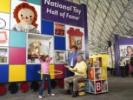
Ed Sobey, who was the first director of the National Inventors Hall of Fame, founded the National Toy Hall of Fame in 1998. The National Toy Hall of Fame, now a partner of The Strong, recognizes toys and games that inspire creative play over multiple generations.
National Wildlife Federation

The National Wildlife Federation (NWF) is dedicated to protecting and restoring wildlife habitat in order to leave a legacy of healthy wildlife for the next generation. Built on a network of state affiliates, the National Wildlife Federation "encourages sustainable conservation policy and promotes transparent natural resource management."
Natural Energy Park
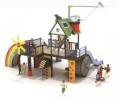
The Natural Energy Park is an experiential playground design that focuses on how movement, the sun, magnets, and water create power to operate different parts of the play equipment.
Natural Learning Initiative

The Natural Learning Initiative (NLI) was founded to assist communities in creating "stimulating places for play, learning, and environmental education - environments that recognize human dependence on the natural world." NLI focuses on the importance of the natural environment in the daily life of all children.
Natural Play and Learning Areas Guidelines Project
The Natural Play and Learning Areas Guidelines Project is dedicated to "bringing nature back into the daily lives of children" and thus to improving children's health, happiness, and scholastic achievement. The Guidelines Project has developed natural play and learning sites which demonstrate how children can "connect, play and learn in nature."
Natural Playgrounds Company
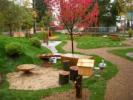
Ron King was listening to kids talking when he founded the Natural Playgrounds Company (NPC) in 2000. "They're critical of the limited challenges, and they're very bored. How many times can they slide down a slide before wanting to try something different?" As an architect and play environment designer, Ron has started a new movement in the playground industry with his environments that use no manufactured equipment.
Natural Playscapes, Creating Outdoor Play Environments for the Soul
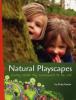
Rusty Keeler's Natural Playscapes, Creating Outdoor Play Environments for the Soul is an explanation of and a workbook for creating children's outdoor play areas. These natural playscapes utilize "art, hills, pathways, trees, herbs, open areas, sand, water, music" so that "children will find places to run, climb, dig, pretend, and hide, with opportunities to bellow or be silent."
Nature Action Collaborative for Children

Nature Action Collaborative for Children (NACC) is dedicated to re-connecting children with the natural world and providing nature education resources to enrich their daily lives.
Nature Explore

Nature Explore is dedicated to assisting children and families “develop a profound engagement with the natural world, where nature is an integral, joyful part of children's daily learning." Nature Explore provides educators, designers, and families research-based resources and play space design consultations to bring nature back into children's daily lives.
Nature Play

Nature play is child-initiated, unstructured play in "wild" areas, like the vacant lot next door, the neighborhood park, or a wooded area with a stream. Playing outdoors is one of the things that characterize childhood, giving children the opportunity to explore, discover, practice, wonder, change, create, and learn about the world around them.
Nature Rocks
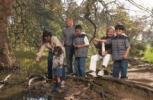
Children & Nature Network and ecoAmerica founded Nature Rocks in 2009, a national program to facilitate families in playing and exploring nature together. Nature Rocks hosts a website where parents can learn that “playing and exploring in nature is an essential ingredient for family bonding and for raising happier, healthier, and smarter children.”
Nature-Deficit Disorder

Nature-Deficit Disorder is a phrase coined by Richard Louv in his book, Last Child in the Woods: Saving Our Children From Nature-Deficit Disorder, published in 2005. Having spent ten years traveling around the country, in both rural and urban areas, asking parents and children alike about their experiences in nature, he discovered that in the last two generations there has been a significant decline in time spent enjoying nature.
NatureGrounds

PlayCore, a playground designer and manufacturer, and the Natural Learning Initiative (NLI), a design and assistance program of the College of Design of North Carolina State University in Raleigh, North Carolina, joined together to create the program NatureGrounds: Putting Nature Into Play.
NERF

Advertised as the “world’s first official indoor ball,” the NERF ball has the distinction of being a safe option for throwing a ball indoors. The NERF brand has expanded to include sports equipment, plastic guns that use foam darts and balls, and water guns that appeal to children and adults alike.
New Games Foundation
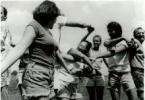
The New Games Foundation was an organization that hosted free community play events in parks where everyone was encouraged to "Play Hard. Play Fair. Nobody Hurt." They believed that physical play was vital for everyone, that no one should be left out of the activity, that little or no equipment is required, and that the rules of play should be "dirt simple and fun."
NFL PLAY 60

In October 2007, the National Football League (NFL) started a youth health and fitness campaign called NFL PLAY 60. In an effort to combat childhood obesity, NFL PLAY 60 focuses on increasing the wellness of young fans by encouraging them to be physically active for a minimum of 60 minutes each day.
Nicros
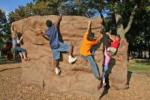
Nicros, Inc., a company which has built over one million square feet of climbing wall surface, was founded in 1992 by Nate Postma, who had a love for rock climbing and a background in chemical engineering. Nicros designs and constructs climbing wall systems, playground boulders, handholds, and landing surfaces.
No Child Left Inside Act

On September 18, 2008, the U.S. House of Representatives approved the No Child Left Inside Act, H.R. 3036. The NCLI Act was initiated partially because of the consequences of the No Child Left Behind Act, which narrowed the focus of the schools on standardized testing and left children with little or no outdoor or environmental experiences.
No Fear: Growing up in a risk averse society
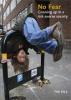
Written by British play advocate Tim Gill, No Fear: Growing up in a risk averse society, questions society's trend to increasingly try to eliminate risks in children's everyday lives based on perceived fears for their safety.
Non-rigid Components
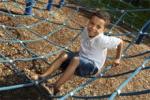
A non-rigid or "flexible" component is defined by ASTM F 1487 as: "...any part of the playground equipment, excluding swings, that temporarily changes its shape when in use; examples include the tire net, the cargo net, and the log bridge." Non-rigid components are used to develop balance and coordination.
Norquist, Tom

Throughout his career Tom Norquist has worked to raise playground industry standards. Tom says that "A major key to safer yet more challenging equipment is promoting equipment design research that emphasizes both developmental and safety factors."
Notts Sport
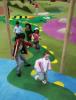
Headquartered in Leicestershire, England, Notts Sport has developed their own sufacing products for playgrounds, as well as artificial turf for sports and landscaping. Their synthetic turf serves the different needs of cricket, tennis, soccer, hockey, golf, and multi-sport fields.
Novelty Playground Era
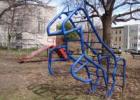
The novelty playground era is the time period in playground history when play spaces departed from the typical basic metal play equipment, concrete pipe designs, and asphalt surfacing of the early 20th century to designs with bright colors and thematic, sculptured play structures.
