
F
4 Great Physical Education
Chris Tamborra and Mark Farnsworth collaborated to form 4 Great Physical Education, an educational consulting firm. 4 Great Physical Education supports the leadership of the school physical education professional in promoting healthier lifestyles to reduce childhood obesity.
Fall Height
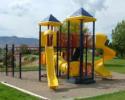
Fall height is a measurement defined as the vertical distance between a designated play surface and the protective surfacing beneath it. The fall height of the equipment should not exceed the critical height of the surface in the design of playgrounds and the type and depth of surfacing used under the equipment.
FAO Schwarz
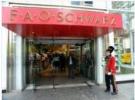
A retail toy store, FAO Schwarz offers "high-end" quality and unique toys from all over the world and showcases them in an interactive and theatrical experience. FAO Schwarz's 150th anniversary was underscored by the induction of founder Frederick August Otto Schwarz into the Toy Industry Hall of Fame in 2012.
Fear
Fear is a distressing response to a perceived danger, whether real or imaginary. Physical responses to fear may result in an accelerated heart rate and breathing, sweaty hands, nausea, headaches, stomach aches, and nervous movements. Emotionally, children may become clingy, impulsive, or distracted, and they may suffer from disturbed sleep patterns.
Fibar, Inc.

Fibar, Inc. was founded by Robert Heath in 1979 as a Wood Fiber supplier for equestrian training surfaces. In 1986, the idea of using wood fiber for under playgrounds was proposed and researched. After testing, Robert found that wood fiber was substantially better at cushioning children's falls than sand, grass, dirt, or gravel, which were the current "safety" surfaces in most places at the time.
First Steps in Organizing Playgrounds
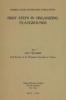
Lee F. Hanmer, the Field Secretary of the Playground Association of America, wrote First Steps in Organizing Playgrounds, published in 1908 to offer "helpful suggestions to committees and associations that are planning to begin or extend public playgrounds."
Fisher-Price

Herman G. Fisher, Irving L. Price, Irving's wife Margaret Evans Price, and Helen M. Schelle founded Fisher-Price in 1930 in East Aurora, New York. Their mission was to produce toys with "intrinsic play value, ingenuity, strong construction, good value for the money, and action."
Fitness

Good physical condition is how fitness is measured. Good physical fitness occurs through healthy habits which include exercise and nutrition. Being physically fit offers many benefits, such as a healthy weight, strong muscles, bones, and joints, decreased risk of developing type 2 diabetes, better sleep, and a feeling of well-being.
FlagHouse Inc

Founded in 1954, FlagHouse, Inc. is a supplier of equipment for physical education, sports, fitness, recreation, and special needs audiences through catalogs and e-commerce options. FlagHouse is the distributor of SNOEZELEN, multi-sensory environments for those with cognitive and physical disabilities.
Flannery, Arch R
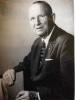
Known as the "father of baseball" in Battle Creek, Michigan, itself the home of amateur baseball, Arch Flannery promoted physical education, amateur sports, and civic recreation for over 40 years. For his achievements the Flannery Softball Complex in Battle Creek was named in his honor and he was posthumously inducted into the Michigan Recreation and Parks Association Hall of Fame in 2005.
Flexibility

Flexibility refers to the body's ability to effectively bend and move without injury. Improving flexibility allows the body to increase the range of motion at a particular joint as well as improving bone, ligament, and joint stability. Flexibility can be improved with stretching. Children develop their flexibility naturally through play.
Flexible Flyer
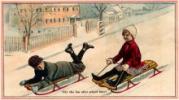
Speeding down a snowy hill on a Flexible Flyer snow sled has been a winter activity enjoyed by children since the 1880s. The Flexible Flyer continued to be sold for over 100 years with little change from its basic design, and the iconic sled is still highly sought after by young and old alike.
ForeverLawn

Offering advanced simulated grass products, ForeverLawn manufactures products for commercial and residential markets. ForeverLawn creates innovative artificial turfs for specialty markets, such as playgrounds, splash parks, sports fields, golf greens, and kennels.
Formal Operational Stage

The formal operational stage is the last of four stages proposed by Jean Piaget to describe the cognitive development of infants, children, and adolescents. The formal operational stage occurs with children from 12 years into adulthood. Emerging abstract thought and hypothetical reasoning mark this stage of cognitive development.
Four Square
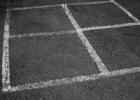
A fast paced ball game, four square is easy to play with no time constraints. Four square has been a popular playground game during recess for years. It has also been called box ball and Kings Corners.
Free Play
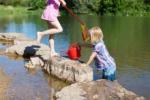
The type of play known as free play is unstructured, voluntary, child-initiated activity that allows children to develop their imaginations while exploring and experiencing the world around them. It is the spontaneous play that comes naturally from children’s natural curiosity, love of discovery, and enthusiasm.
Free Play LLC
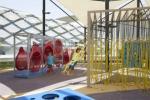
Free Play LLC is a design studio that creates abstract sensory play equipment for interactive learning and unstructured playing. Through these abstract structures they seek to "give kids not just a physical workout, but a cognitive one, too, as they decide what to do with each structure."
Free-Range Kids

The blog, Free-Range Kids, is written by Lenore Skenazy, who was dubbed "America's Worst Mom" by the media for allowing her 9-year-old son to ride the subway in New York City alone. The Free-Range Kids blog has become one of the central clearinghouse websites for airing concerns of media reports that demonstrate the trends of adults who overly protect children from perceived dangers.
Freenotes Harmony Park
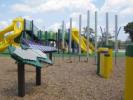
Started by Richard Cooke, Freenotes and Freenote instruments have been influential in combining music with play creating outdoor musical instruments for playgrounds. Freenotes Harmony Park is a company that produces musical instruments suitable for outdoor playgrounds, schools, museums, hospitals, community gardens, and other outdoor settings.
Fresh Air Fund
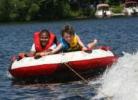
The Fresh Air Fund is a nonprofit agency that organizes free summer experiences in the country for New York City children who often aren't allowed to play outside due to unsafe neighborhoods. It also is designed to help New York City youngsters understand the relationship between school and work and how to make choices that will determine their futures.
Friedberg, M Paul

M. Paul Friedberg is a landscape architect who has influenced urban design of playgrounds, parks, plazas, and outdoor malls to encourage opportunities for play. Paul believes that, "Design is not the ultimate goal. It's the vehicle by which the ultimate goal is play."
Frisbee

The Frisbee is a plastic flying disc that has been enjoyed as a recreational toy for people of all ages, whether in the backyard, at the park, or on the beach. They are typically used as a game of catch with the Frisbee spinning through the air when thrown.
Froebel Gifts
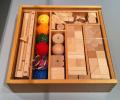
Friedrich Froebel was a German educator in the early 1800s who is considered the founder of the kindergarten movement. He developed a series of play materials he called Gifts that included geometric building blocks designed to teach children about forms and their relationships in nature.
Froebel, Friedrich
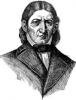
Friedrich Froebel was truly a pioneer in early childhood education. He established a new type of school for three and four year old children in 1837, which he called a child's garden or kindergarten. Prior to this there had been no educational training for children under the age of seven.
Frost Play Research Collection

The Frost Play Research Collection was dedicated in the spring of 2004 with the purpose of making available historical and contemporary research material for students and play scholars. The collection of teacher, researcher, and author, Dr. Joe L. Frost, is comprised of materials from his extensive research library and donated material.
Frost, Joe

After more than 50 years of teaching, consulting, and writing about child development and play, Dr. Joe Frost was acknowledged as the contemporary father of play advocacy. Dr. Frost's academic studies centered on child development and culminated in a Doctorate degree from the University of Arkansas.
Fuel Up to Play 60
A joint venture of the National Football League (NFL) and the National Dairy Council (NDC), Fuel Up to Play 60 is designed to address the increasing problem of childhood obesity. Fuel Up to Play 60 is an initiative to empower youths to take action to improve nutrition and physical activity at their schools.
Functional Play

Functional play has been described as the first play of children. Beginning in infancy, as a child learns to control his actions and make things happen, he finds enjoyment in shaking a rattle, splashing in the bath, and dropping objects repeatedly from his high chair.
Fundamental Movement Phase

Children move through a developmental progression in the acquisition of motor skills. There are four phases of motor development: the reflexive movement phase, the rudimentary movement phase, the fundamental movement phase, and the specialized movement phase. The fundamental movement phase occurs between the ages of 2 and 7 as children gain control over their gross motor and fine motor skills.
